


Queensland fruit fly outbreak declared in Elizabeth East
Friday 16 January 2026
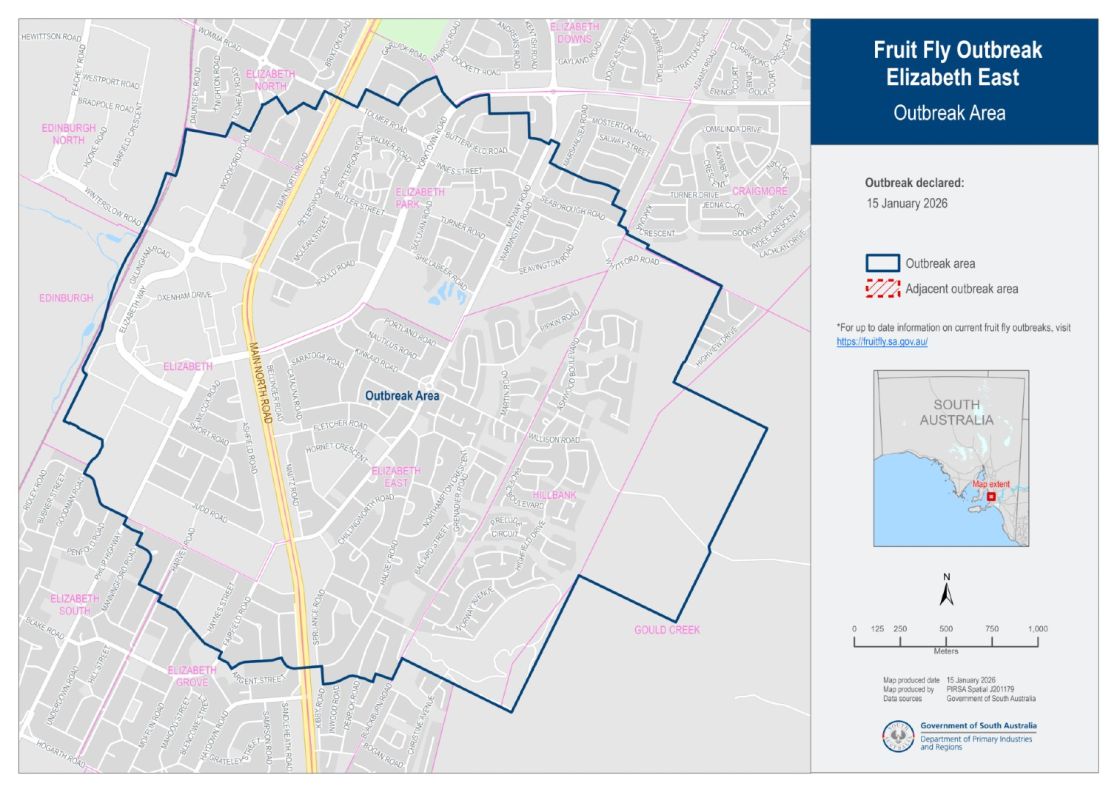
The Department of Primary Industries and Regions SA (PIRSA) has declared a Queensland fruit fly outbreak in Elizabeth East, in Adelaide’s northern suburbs, and is urging residents in the affected area to follow quarantine requirements.
This new fruit fly outbreak was declared after five Queensland fruit flies were found in monitoring traps by PIRSA staff as part of regular surveillance activities. Elizabeth East and surrounding suburbs are impacted, check the outbreak map to see if you are affected.
PIRSA staff, easily identifiable by their identification tags, have started visiting households. These staff members will be applying an organic bait to foliage and checking fruit for signs of fruit fly, including maggots. PIRSA will also hold industry meetings in the coming days.
See the red outbreak area restrictions to learn more about quarantine requirements.
Director of Plant and Invasive Species Biosecurity, Nick Secomb, said he was confident that the use of proven control measures would achieve successful eradication, but stressed that community cooperation with all quarantine restrictions is essential.
“Any movement of untreated fruit risks spreading this pest, which is why it is essential that the community living within the 1.5km red outbreak zone follow the rules and do not remove fresh fruit or fruiting vegetables from their property, this includes not sharing produce with family or neighbours, or selling it online,” Mr Secomb said.
“You can only move home-grown fruit and fruiting vegetables from your property if you cook, juice or preserve your own home-grown produce first. Home-grown and purchased fruit continues to be safe to eat.
“Now is the time to inspect the ripe fruit left on trees in your garden, including stone fruit, for signs such as bruising from egg laying or maggots, and report anything unusual to the Fruit Fly Hotline on 1300 666 010.
“Also, a reminder to families and students returning to school in the coming weeks, fruit and vegetables purchased from supermarkets are not impacted and can still be transported to schools in lunchboxes.”
Mr Secomb said that Queensland fruit fly develops more quickly during warmer months, as higher temperatures create ideal conditions for adults, eggs and larvae inside fruit, as well as pupae in the soil, particularly when fruit is plentiful on trees.
PIRSA has a strong track record of successfully eradicating fruit fly in metropolitan areas, and this success relies on residents following the advice provided and allowing easy access to their properties.
To help quickly break the fruit fly life cycle, it’s important for the community to:
- make sure your garden is tidy
- pick up any fallen fruit off the ground
- remove any unwanted fruit from your trees and place it in your green bin.
PIRSA will also plan to undertake Sterile Insect Technique (SIT) fly releases in the outbreak area, which is a key tool of fruit fly eradication and is most effective once the 12 weeks of organic baiting is complete.
Find further information and advice on the Elizabeth East outbreak on fruitfly.sa.gov.au